



Is your payroll keeping up with the fast-changing demands of 2026, or are manual processes and complex awards still making every pay run a challenge? Outsourced payroll is about more than just paying employees on time, it’s about streamlining operations, reducing errors and freeing up your team to focus on growing your business.
In this 2026 guide to managing outsourced payroll in Australia, you will learn why more businesses are choosing payroll outsourcing and benefits, what to expect from payroll outsourcing companies and payroll management services, how payroll services cost and pricing models work, the different types of payroll outsourcing available (from full-service to cloud-based solutions), how to select the right payroll outsourcing service provider and practical steps and best practices to manage payroll processes effectively with your partner every pay cycle.
What Is Payroll Outsourcing?
Payroll outsourcing means hiring an external provider to handle your payroll functions. Instead of managing payroll internally, you transfer the responsibility to specialists who offer payroll management services.
These providers handle wage calculations, superannuation contributions and other payroll processes, ensuring every pay cycle runs smoothly without errors.
Key Services Included in Outsourced Payroll
When you outsource payroll services, you typically receive a streamlined set of payroll management services that cover all core payroll processes. Key services included in outsourced payroll are:
- Wage calculations: Automated processing of salaries, overtime and allowances for accurate, on‑time payments.
- Tax withholdings: PAYG tax calculations and ATO submissions handled correctly each pay cycle.
- Superannuation management: Accurate super contributions and timely lodgements to avoid penalties.
- Single Touch Payroll reporting: Real‑time ATO compliance with every pay run.
- Leave management: Digital tracking of annual leave, sick leave and other entitlements.
- Employee self‑service portals: Secure access to payslips and personal details, reducing HR queries.
- Year‑end processing: Payment summaries and reconciliation to simplify end‑of‑financial‑year reporting.
These payroll services examples show how payroll outsourcing in Australia helps businesses manage payroll effectively, reduce errors and free up internal teams from complex payroll tasks.
Why Outsource Payroll? Understanding the Benefits
Outsourcing payroll offers clear benefits that help Australian businesses streamline operations and reduce risk. Here’s why more companies are choosing payroll outsourcing in Australia:
- Save time and resources: Outsourcing payroll and benefits frees up your team to focus on core business activities, rather than spending hours on manual payroll processing.
- Ensure compliance and reduce risk: Payroll outsourcing companies stay updated with changing regulations, Fair Work requirements and ATO submissions, helping you avoid costly penalties and risks like wage theft.
- Improve accuracy and eliminate errors: Automated systems and expert oversight reduce mistakes in calculations and super contributions, ensuring every pay run is error-free.
- Access expert knowledge: Payroll outsourcing service providers employ specialists who understand award rates, leave accruals and complex employment agreements, so you benefit from their expertise without hiring in-house staff.
- Scale with business growth: Payroll outsourcing services easily adapt to your changing needs whether you’re hiring more staff, expanding locations, or managing complex pay structures.
- Reduce costs: Outsourcing payroll is often more cost-effective than maintaining an in-house team, with predictable monthly payroll service rates and fewer hidden expenses.
These benefits show how payroll outsourcing in Australia helps businesses manage payroll effectively, stay compliant and focus on growth.
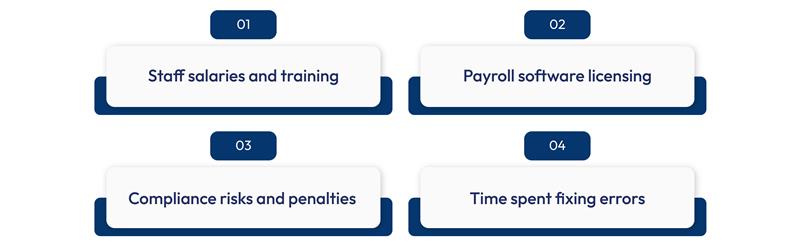
Outsourcing provides predictable monthly costs. You know exactly what you’re paying for reliable service.
Understanding Payroll Outsourcing Cost (2026)
Understanding payroll outsourcing costs in 2026 is crucial for businesses aiming to manage expenses effectively. Let’s break down the key aspects:
Typical Pricing Models
- Per-Employee-Per-Month (PEPM) Pricing: Most payroll outsourcing companies use this model, with costs typically ranging from $5 to $25 per employee per pay run.
- Flat-Rate Pricing: Some providers offer fixed monthly fees, which work well for businesses with stable employee numbers.
- Percentage-Based Pricing: A few payroll outsourcing service providers charge a percentage of your total payroll value.
Factors Affecting Payroll Services Cost
- Number of employees: More employees generally mean higher costs.
- Payroll frequency: Weekly payrolls cost more than monthly ones.
- Complexity: Multiple awards, EBAs, or locations increase prices.
- Service level: Full-service options cost more than basic processing.
- Additional services: Year-end reporting, custom reports and integrations can add to the cost.
Additional Costs to Consider
- Implementation and setup fees
- System integration costs
- Year-end processing charges
- Custom reporting fees
- Award interpretation services
- Termination or switching fees
Always ask for transparent pricing from payroll companies in Australia and request a detailed breakdown of all costs upfront. This ensures you get reliable payroll management services at a predictable price, helping you budget accurately and avoid unexpected expenses.
Types of Payroll Outsourcing Services
Not all payroll outsourcing in Australia works the same way. Let’s explore different service models.
Full-Service Payroll Outsourcing
This is the most comprehensive option. The payroll outsourcing service provider handles everything from start to finish.
Services include:
- Complete payroll processing
- All tax and super obligations
- Employee queries and support
- Compliance management
- Reporting and analytics
This model suits businesses wanting complete hands-off payroll management. Payroll outsourcing Brisbane providers often offer this comprehensive service.
Co-Sourced Payroll Services
This hybrid model shares responsibilities between you and the provider. You retain some control while outsourcing complex tasks.
For example, you might:
- Handle time tracking internally
- Submit data to the provider
- Let them manage calculations and compliance
- Approve payroll before processing
Cloud-Based Payroll Solutions
These Software-as-a-Service (SaaS) platforms give you more control. You manage payroll using their technology and support.
Benefits include:
- Real-time access to payroll data
- Automated calculations and compliance
- Integration with existing systems
- Flexible pricing based on usage
Specialist Payroll Services
Some providers focus on specific industries or situations:
- Multi-state payroll – For businesses operating across Australian states
- International payroll – Managing overseas employees
- Construction payroll – Handling complex award rates
- Healthcare payroll – Managing shift penalties and allowances
How to Choose the Right Payroll Outsourcing Company
Selecting the right payroll management services provider is crucial. Here’s how to make an informed decision.
Step 1: Assess Your Business Needs
Before researching providers, understand what you need:
- How many employees do you have?
- What’s your payroll frequency?
- Which awards or EBAs apply?
- Do you need multi-state or international payroll?
- What integrations do you require?
- What’s your budget for payroll outsourcing cost?
Step 2: Evaluate Provider Capabilities
Look for payroll outsourcing australia providers with:
Proven Experience
- Years in business
- Client testimonials and case studies
- Industry-specific expertise
Technology Platform
- User-friendly interface
- Mobile accessibility
- Integration capabilities
- Security certifications
Compliance Expertise
- ATO compliance track record
- Fair Work knowledge
- Industry award understanding
- Regular legislative updates
Customer Support
- Availability and responsiveness
- Dedicated account managers
- Training and onboarding support
Step 3: Compare Service Offerings
Create a comparison table of different payroll processing firms:
| Provider | Services | Technology | Compliance | Support | Cost |
|---|---|---|---|---|---|
| Provider A | Full service | Cloud-based | ATO & Fair Work | 24/7 | $15/employee |
| Provider B | Co-sourced | Integrated | ATO compliant | Business hours | $12/employee |
| Provider C | SaaS platform | Self-service | Award engine | Email support | $8/employee |
Step 4: Check References and Reviews
Contact existing clients of potential providers. Ask about:
- Accuracy of payroll processing
- Timeliness of payments
- Quality of customer support
- Handling of complex situations
- Overall satisfaction
Step 5: Understand Contract Terms
Before signing, clarify:
- Service level agreements (SLAs)
- Data ownership and portability
- Termination clauses and fees
- Liability and indemnification
- Pricing structure and increases
How to Manage Payroll Effectively with an Outsourced Provider
Once you’ve chosen a provider, effective management ensures smooth operations. Here’s how to manage payroll effectively.
1. Establish Clear Communication Channels
Set up regular communication with your payroll outsourcing service provider:
- Weekly check-ins – During initial implementation
- Monthly reviews – To discuss variances and issues
- Quarterly meetings – For strategic planning and improvements
- Ad-hoc support – For urgent queries
2. Implement Efficient Data Collection Processes
Your provider needs accurate, timely data for each pay run. Establish systems for:
Time and Attendance
- Use digital time clocks or roster systems
- Integrate attendance data with payroll
- Set clear approval workflows
Employee Changes
- Create processes for new hires
- Document pay rate changes
- Track terminations and final pays
Leave Management
- Use self-service portals for leave requests
- Automate approval workflows
- Maintain accurate leave balances
3. Set Up Review and Approval Workflows
Before each payroll run:
- Review timesheet data – Check for anomalies or errors
- Verify employee changes – Confirm all updates are captured
- Check calculations – Review payroll summaries
- Approve payroll – Give final authorisation
- Monitor processing – Ensure successful completion
4. Monitor Payroll Reports Regularly
Good payroll management services provide detailed reporting. Review these regularly:
- Payroll summaries – Total costs and variations
- Labour cost reports – By department or project
- Leave liability reports – Accrued entitlements
- Compliance reports – Tax and super obligations
- Exception reports – Outliers and unusual payments
5. Maintain Accurate Records
Even when outsourcing, keep organised records:
- Employee contracts and agreements
- Award or EBA documents
- Payroll authorisations and approvals
- Correspondence with the provider
- Audit trails and reports
6. Conduct Regular Audits
Schedule periodic payroll audits to ensure:
- Award interpretation accuracy
- Correct super contributions
- Proper tax withholdings
- Leave accrual calculations
- Compliance with regulations
Many payroll outsourcing australia providers offer audit support services. Take advantage of this.
Payroll Processes: What Happens Each Pay Cycle
Understanding payroll processes helps you manage them better. Here’s what happens during each cycle.
Week 1: Data Collection
- Employees submit timesheets
- Managers approve work hours
- HR processes any changes
- Leave requests are finalised
Week 2: Payroll Processing
The payroll outsourcing company:
- Imports timesheet data
- Calculates wages and entitlements
- Applies tax withholdings
- Calculates super contributions
- Generates payslips
Week 3: Review and Approval
- You review payroll reports
- Check for anomalies
- Verify employee payments
- Approve the payroll run
Week 4: Payment and Compliance
The provider:
- Processes employee payments
- Submits Single Touch Payroll reports
- Pays super contributions
- Generates compliance reports
- Archives payroll records
This cycle repeats every pay period. Efficient processes make it seamless.
Common Challenges and How to Overcome Them
Even with outsourced payroll, challenges can arise. Here’s how to handle them.
Challenge 1: Data Accuracy Issues
Problem: Incorrect timesheets or employee data lead to payroll errors.
Solution:
- Implement digital time tracking systems
- Set up automated data validation
- Train employees on proper data entry
- Use integration between systems
Challenge 2: Communication Gaps
Problem: Misunderstandings between you and the provider cause delays.
Solution:
- Establish clear communication protocols
- Use dedicated contact persons
- Document all instructions in writing
- Schedule regular meetings
Challenge 3: Award Complexity
Problem: Complex modern awards lead to calculation errors.
Solution:
- Choose providers with award expertise
- Request detailed award interpretations
- Conduct regular compliance reviews
- Stay informed about award changes
Challenge 4: System Integration Problems
Problem: Payroll doesn’t integrate smoothly with other systems.
Solution:
- Choose providers with proven integration capability
- Allocate time for proper setup
- Test integrations thoroughly
- Maintain clear data mapping
Challenge 5: Cost Overruns
Problem: Unexpected charges increase payroll services cost.
Solution:
- Get detailed pricing upfront
- Understand what’s included
- Monitor usage and charges
- Review contracts regularly
Payroll Outsourcing in Different Australian Locations
Payroll outsourcing services are available throughout Australia. Here’s what to consider by location.
Payroll Outsourcing Brisbane
Brisbane-based businesses benefit from providers with knowledge of:
- Queensland-specific awards
- Local payroll tax thresholds
- Regional labour markets
- Industry-specific requirements
Payroll Services Australia Wide
National providers offer consistency across states. Consider them if you:
- Operate in multiple Australian locations
- Need standardised processes
- Want centralised reporting
- Require economies of scale
State-Specific Considerations
Different states have varying:
- Payroll tax rates – Thresholds differ by state
- Long service leave – Rules vary significantly
- Workers compensation – State-based schemes
- Public holidays – Different dates and entitlements
Choose providers with expertise in your operating locations. This ensures compliance with all relevant regulations.
Payroll Outsourcing vs In-House Payroll: Making the Right Choice
Should you outsource or keep payroll in-house? Let’s compare both approaches.
Comparison Table
| Aspect | Outsourced Payroll | In-House Payroll |
|---|---|---|
| Cost | Predictable monthly fees | Variable costs (staff, software, training) |
| Expertise | Access to specialists | Limited to staff knowledge |
| Compliance | Provider responsibility | Business responsibility |
| Control | Shared control | Complete control |
| Scalability | Easy to scale | Requires hiring |
| Technology | Included in service | Separate investment |
| Time | Minimal admin | Significant time investment |
| Risk | Shared risk | Full business risk |
When to Choose Outsourcing
Outsource payroll services when:
- You have limited payroll expertise
- Compliance is complex
- Time is better spent elsewhere
- You need to scale quickly
- Cost predictability matters
- You want to reduce risk
When to Keep Payroll In-House
Consider in-house payroll if:
- You have simple pay structures
- You employ payroll specialists
- Complete control is essential
- You have robust systems
- Your business is very small
- Integration with other functions is critical
Conclusion
Outsourcing payroll in Australia gives businesses a way to simplify complex award rules, stabilise costs and reduce compliance risks while still retaining control through clear processes, reporting and approvals. By understanding service models, pricing structures and provider capabilities, you can choose a partner who delivers accurate pay runs, supports your growth and integrates smoothly with your existing systems so payroll stops being a headache and becomes a predictable, well‑governed function.
Ready to streamline payroll in 2026? Speak to the Outbooks Australia team today to explore a end-to-end outsourced payroll solution for your business.
Let’s talk via email: info@outbooks.com.au or call us at 0451 320 102 to speak with our team today.
Frequently Asked Questions (FAQs)

Parul is a content specialist with expertise in accounting industry. Her writing covers a wide range of domains such as, Accounts Payable, Accounts Receivables, Bookkeeping and more. She writes well-researched content and has a strong understanding of accounting terms and industry-specific terminologies. As a subject matter expert, she simplifies complex concepts into clear, practical insights, helping businesses with accurate tips and solutions to make informed decisions.